Science in action: DP1 students develop sustainable solutions for the Academy
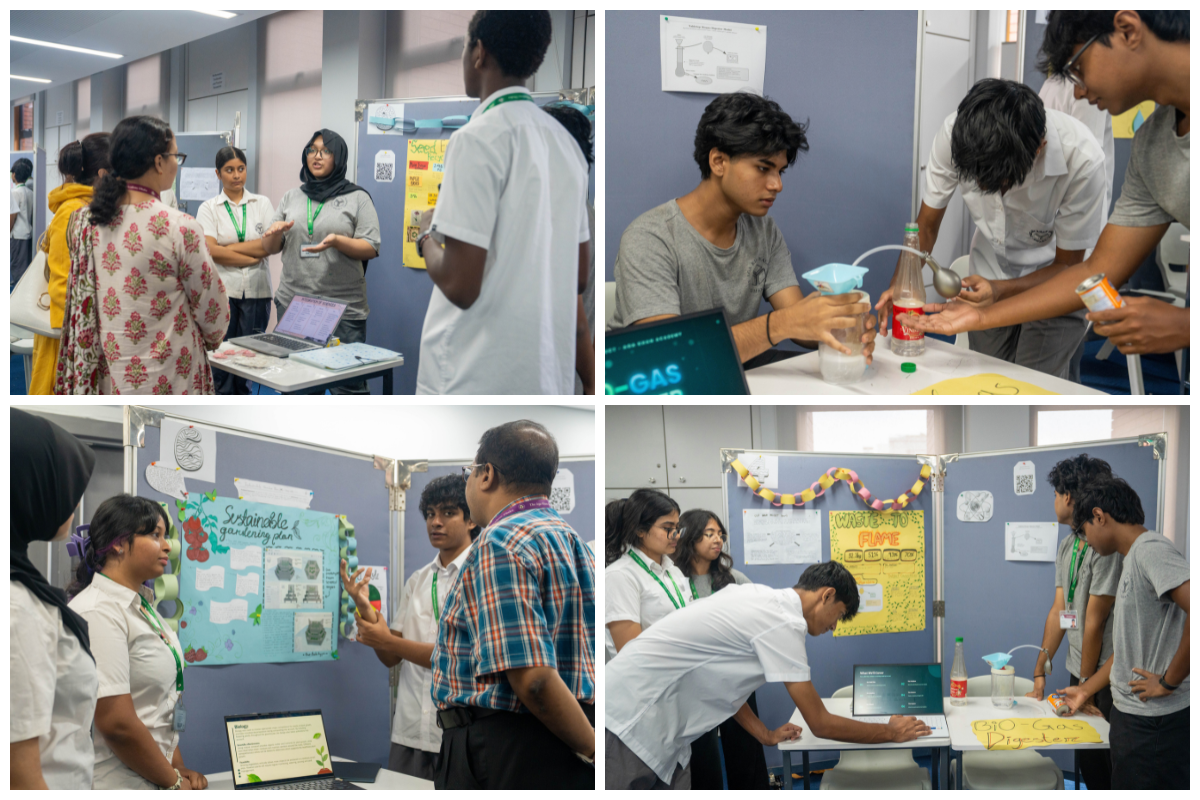
How can water flowing through a school building generate electricity? Could food waste from the cafeteria become a source of cooking gas? These were among the questions explored by Diploma Programme 1 students at the Aga Khan Academy Dhaka as they investigated practical approaches to environmental sustainability through the Collaborative Sciences Project (CSP).
The CSP brings students together to investigate real-world challenges through different scientific disciplines. Over several months, students researched environmental issues, collected and analysed data, visited relevant sites and developed solutions that could contribute to reducing waste and improving sustainability at the Academy. The process encouraged students to move beyond individual subject areas, drawing connections between biology, chemistry and physics while considering the practical implications of their ideas.
After months of research and development, students shared their ideas at the CSP exhibition, presenting their proposed solutions to teachers and parents. Their projects explored integrating paper waste into soil, treating water, managing food waste, developing biodegradable materials and using bulk refillable paint storage to reduce single-use packaging. As visitors moved between the displays, students explained their thinking, answered questions and discussed how their ideas could work in practice.
Finding energy in an everyday resource
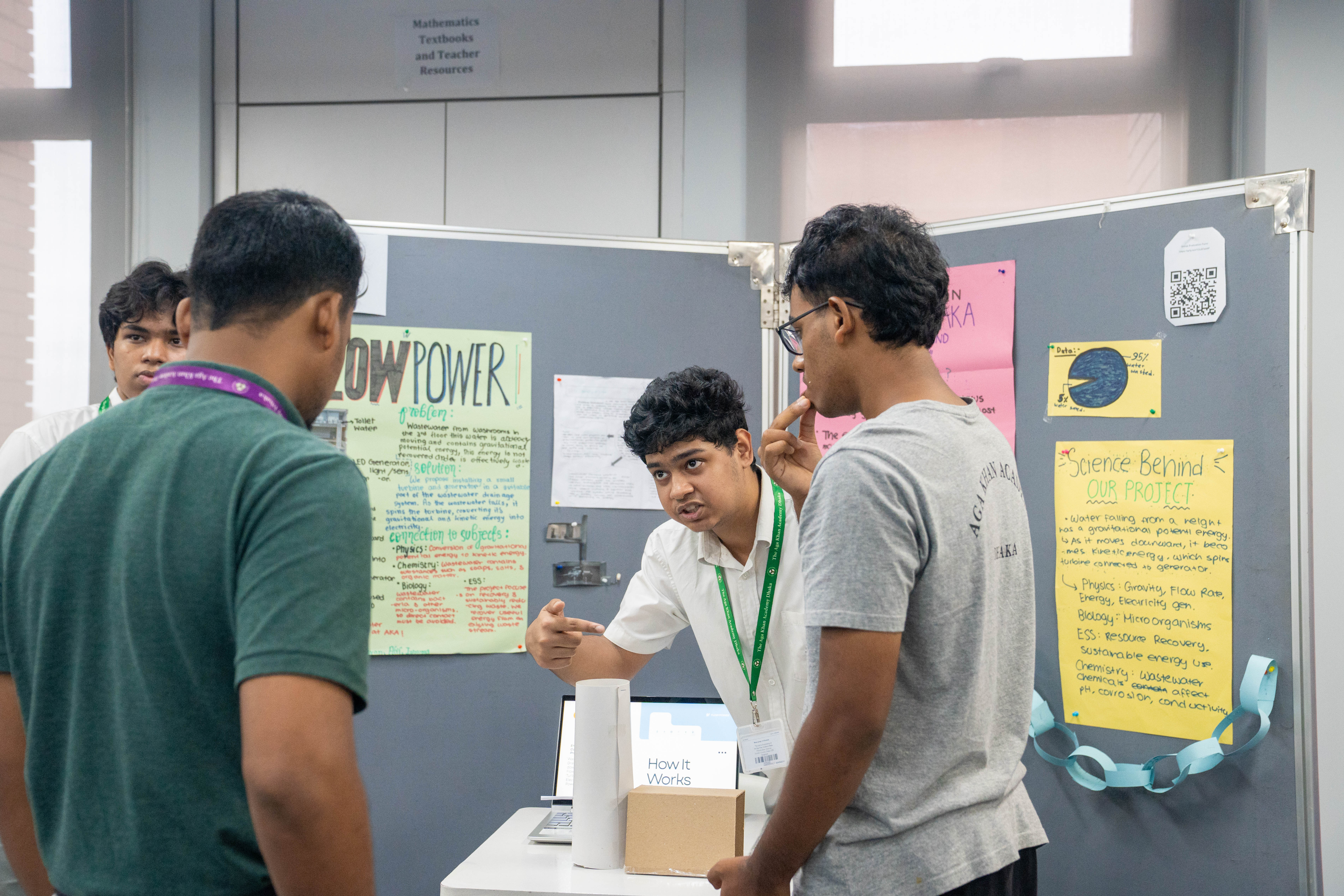
One group of students took a closer look at something that is usually taken for granted: water flowing down the Academy’s drains. For their project “Flow Power”, students visited the Christian Commission for Development in Bangladesh Climate Centre in Gazipur to explore cost-effective approaches to environmental sustainability initiatives that could be adapted to the campus.
The group also conducted a survey to assess water use and waste generation at the Academy. Based on their research, they proposed a system in which water travelling down drains from the upper floors could pass through a miniature turbine connected to a generator. The electricity produced could then help power low-energy sensors and LED lights before the water continues through the drainage system.
For group member Ishayat Iftekhar, the experience demonstrated how complex environmental challenges can be better understood by combining different subjects. “Working on our project helped me understand how physics, chemistry and environmental science intertwine and how working together is essential in approaching a common goal,” Ishayat said.
Turning food waste into a resource
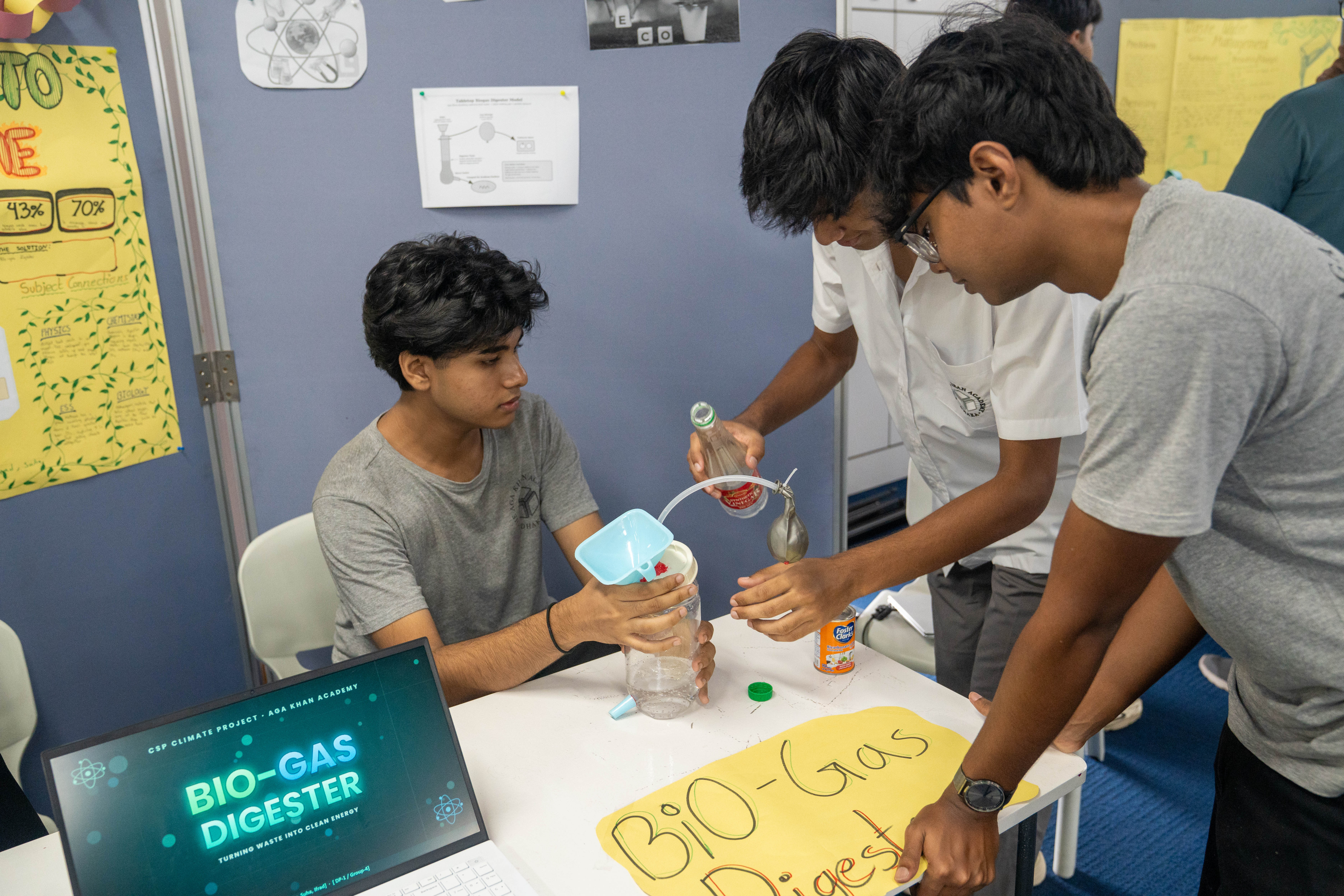
Another group of students examined the food waste generated on campus and proposed using a biogas digester to convert it into cooking gas. Rather than treating discarded food solely as waste, their proposal explored how it could become a useful resource while contributing to more sustainable waste management.
The research process also taught the students an important lesson about problem-solving. Ifrad Rana, a member of the group, reflected that their search for the “perfect” solution initially made the process more complicated than it needed to be.
“In the end, we realised that a much simpler idea could still effectively achieve our original goal,” Ifrad said. “As a team, we also learnt the value of effective communication, sharing ideas, listening to different perspectives and working together.”
For Ifrad, the experience also changed how the group viewed its own capacity to contribute. “It showed us that, as students, we can help our communities overcome environmental challenges and become sustainable.”
The exhibition demonstrated that the value of the CSP extends beyond the solutions presented on the day. Through research, experimentation, fieldwork and collaboration, students learnt to approach environmental challenges from multiple perspectives, evaluate possibilities and refine their ideas together. In doing so, scientific knowledge became a tool for investigating challenges within their own community and considering how thoughtful, practical responses can contribute to a more sustainable future.



publications
AKA Dhaka IB School Profile 2025-2026
You can also keep up-to-date with latest news on the Aga Khan Academy Dhaka on our Facebook page.